
Is It News or Is It Propaganda? Part Two

When it comes to MSG, the food-additive cabal appears to have gotten the entire mainstream-media realm under its direction.

Linda Bonvie

This past spring, I received an email from a writer by the name of Clarissa Wei.

She wrote: “I’m a freelance journalist currently working on a story about the history of MSG for National Geographic, with a focus on how public narratives have shifted over the past decade. I found your Substack piece Is it News or is it Propaganda? to be a valuable counterpoint.

“While many recent stories emphasize the science clearing MSG’s name, your piece raises important questions about how that message is packaged, funded, and disseminated. and who ultimately benefits.

“I’d love to include your voice in my piece.”

Clarissa even provided links to past articles she had done for big-name media outlets, such as The New York Times, BBC, and The New Yorker.

“I appreciate the chance to be included,” I unsuspectingly wrote back, adding, “Thanks for tracking me down.”

The ‘Big Fat Lies’

In the mid-1990s, I was introduced to Adrienne Samuels and her husband, Jack.

The ultimate accidental consumer advocates, Jack and Adrienne spent the second half of their lives informing regulators and warning the public about the dangers of free glutamic acid, which is the active ingredient in monosodium glutamate and a long list of other food additives.

I worked with Adrienne (who held a Ph.D.) until her passing at the age of 89 in 2024. And over those many years, I learned a lot from her, especially what she liked to call the “Big Fat Lies” on the subject.

But her most important lesson, something she would tell me again and again, is that no mainstream media organization would EVER include information in an article that goes against the official propaganda line bought and paid for by the glutamate industry. You’re apt to come across its misinformation/lies online, in print, or on TV, Adrienne wrote, in what appear to be “legit” articles, and in cutesy video presentations that pop up on Facebook. All that propaganda – that hype — is constructed on six falsehoods…

Based on what I learned, I even wrote extensively about the Ajinomoto/Edelman PR World Umami Forum in 2018, which, in truth, turned out to be nothing more than a boot camp for journalists and bloggers to help them effectively spread the messaging of Ajinomoto, the world’s largest producer of monosodium glutamate.

But somehow, when Clarissa contacted me, I thought perhaps times had changed. After all, National Geographic is all sciency, a supposed pillar of scholarly information since 1888. Never mind that it somehow seemed an odd venue for an article on MSG.

Clarissa sent me her questions, which I promptly answered.

Enter Edelman

The piece that caught Clarissa’s eye, titled “Is it news or is it propaganda?” appeared on my Substack almost two years ago.

It revealed a spate of CBS programming that was straight out of the Ajinomoto playbook and that of its PR agency, Edelman Public Relations. The messaging I described that appears in all MSG programming and articles, not just those from CBS, always follows the same predictable path—namely, that MSG is “making a comeback” (a term used so often that it must be a mandatory line).

Invariably included in such messaging is a letter sent over 55 years ago to the New England Journal of Medicine that started the entire “controversy.” In addition, there has since been “decades of research;” bevies of chefs making appearances to discuss what a wonderful addition MSG is to culinary creativity, and for the grand finale, the xenophobic zinger – that avoidance of MSG is somehow “anti-Asian.”

Clarissa’s article in National Geographic came out in June without including either my “voice” or that of anyone else with a “valuable counterpoint.”

In fact, the article followed the blueprint of hundreds of others that preceded it so perfectly, it even included “making a comeback” in the headline and ended by touching on “decades of racialized fear.”

The brain-cell threat that disappeared from the dialogue

The concept of MSG’s “making a comeback” after a ruinous blow from that aforementioned doctor’s 1968 letter to the New England Journal of Medicine, describing his reactions after eating in Chinese restaurants, is a rather interesting marketing device.

As it happened, a much bigger and well-publicized event occurred the very next year. Never mentioned in one of these almost certainly “placed” articles are the 1969 findings by Dr. John Olney, a top researcher at the Washington University School of Medicine in St. Louis, who had recently published data showing that when newborn mice were exposed to the additive, they suffered extensive brain damage and endocrine disorders. Olney coined the term “excitotoxin” at the time to describe those reactions caused by monosodium glutamate. Shortly afterwards, Olney found the same brain-damaging effects could be duplicated in infant rhesus monkeys.

Certainly, fessing up to “Chinese Restaurant Syndrome” is a lot more palatable to industry than debating whether or not MSG kills brain cells in baby monkeys.

And keep in mind that back then, MSG was actually being added as a flavor enhancer to baby food, making the resulting publicity and backlash immediate, and causing three major companies to remove MSG from their baby-food jars.

Over the years, the glutamate industry has worked hard to rearrange or obliterate such inconvenient facts whenever possible, using clever PR techniques and well-placed articles promoted by extensive contacts with legitimate journalists who have access to top-tier outlets, along with social media “influencers.”

Some of the most long-lived lies include the repetitive refrain that the glutamate in MSG is “identical” to what’s found in the human body*, and that the additive occurs “naturally” in food**.

The dissemination of this type of disinformation, no doubt, won’t stop anytime soon. It is, after all, extremely well-funded, and the continued, unabated use of MSG and other similar flavor-enhancing additives will go on being regarded as a necessary ingredient in cheap, ultra-processed foods.

But I’m thinking that perhaps I did have a small but significant effect on Clarissa’s story after all.

Mentioning a “corporate narrative” at the end, she also says, “When identity, science, and branding align, it can be hard to tell who’s leading the conversation.”

Considering the formidable food-industry forces she was up against, I guess that counts for something.


For more information on additives that contain free glutamate, see this page at the Truth in Labeling Campaign.

*The glutamate in the human body is L-glutamate. L-glutamate, only. The glutamate of any manufactured glutamate (found in monosodium glutamate and pea protein isolate, for example) is made up of both L-glutamate and D-glutamate, plus numerous toxic impurities created during the manufacturing process that the industry has been unable to eliminate.

**MSG is manufactured using genetically modified bacteria that excrete glutamic acid through their cell walls. In the United States, monosodium glutamate is produced in Ajinomoto’s plant in Eddyville, Iowa. Over the decades, there have been numerous patents filed for various methods of producing monosodium glutamate, which is most definitely not naturally occurring.

Umami: The Con of the Decade?

Note: This blog, authored by Truth in Labeling Campaign co-founder Adrienne Samuels, is even more relevant today than when she wrote it several years ago. The MSG “marketing department” is going full-steam ahead with the idea of “umami,” hoping that everyone will forget that monosodium glutamate has always been considered a “flavor enhancer” with no taste of its own.

It has always been my opinion that the concept of umami was developed to promote the sale of monosodium glutamate, with a very large enterprise developed to promote the fiction.

When I was first introduced to “umami” I had a creeping suspicion that the concept of umami had been promoted in an effort to legitimize the use of monosodium glutamate in food, drawing attention away from the fact that monosodium glutamate is a neurotoxic amino acid which kills brain cells, is an endocrine disruptor (causing obesity and reproductive disorders), and is the trigger for reactions such as asthma, migraine headache, seizures, depression, irritable bowel, hives, and heart irregularities.

It’s common knowledge that there are glutamate receptors in the mouth and on the tongue. Could researchers be hired to produce studies demonstrating that glutamate containing food can stimulate those glutamate receptors, and then declare to the world that a fifth taste has been discovered — calling it umami? I wondered.

Never mind that for years monosodium glutamate was described as a tasteless white crystalline powder. Never mind that Julia Child, who in her later years was recruited to praise the use of monosodium glutamate, never once mentioned the additive in her cookbooks. Never mind that if there was taste associated with monosodium glutamate, people who are sensitive to MSG would be highly motivated to identify that taste and thereby avoid ingesting MSG – which they claim they cannot do.

It certainly would be wonderful, I thought, if the glutamic acid in processed free glutamic acid (MSG) had a delicious, robust, easily identifiable taste of its own. Even if the taste was unpleasant instead of delicious, it would still be wonderful — at least the adults who are sensitive to MSG could identify the additive in their food and avoid eating it. MSG-induced migraine headaches, tachycardia, skin rash, irritable bowels, seizures, depression, and all of the other MSG-induced maladies, could become nothing more than bad memories.

Sometime after Olney and others demonstrated that monosodium glutamate was an excitotoxin — killing brain cells and disrupting the endocrine system — Ajinomoto, Co., Inc. began to claim that their researchers had identified/isolated a “fifth taste.” The “fifth taste,” they said, was the taste of processed free glutamic acid. This alleged fifth taste was branded “umami.”

The word “umami” has been in the Japanese vocabulary for over a century, being in use during the Edo period of Japanese history which ended in 1868. In the 1990s, it was written that “umami” can denote a really good taste of something – a taste or flavor that exemplifies the flavor of that something. It was said that the taste of monosodium glutamate by itself does not in any sense represent deliciousness. Instead, it is often described as unpleasant, and as bitter, salty, or soapy. However, when monosodium glutamate is added in low concentrations to appropriate foods, the flavor, the pleasantness, and the acceptability of the food increases.

For years, certainly up to the turn of this century, monosodium glutamate had been thought of as a flavor enhancer – like salt. Something that enhances the taste of the food to which it is added. Early encyclopedia definitions of monosodium glutamate stated that monosodium glutamate was an essentially tasteless substance. The idea (advanced by Ajinomoto) that monosodium glutamate has a taste of its own, as opposed to being a flavor enhancer, is relatively recent. Not just a taste of its own, mind you, but something newsworthy that could attract national or international attention. A fifth classification of taste added to the recognized tastes of sweet, salty, bitter, and sour.

The idea that monosodium glutamate has a unique taste can be tracked in the scientific literature if you read vigilantly. I don’t know whose brainchild it was, but it certainly was a brilliant move on the road to marketing monosodium glutamate – a move precipitated by a growing public recognition that monosodium glutamate causes serious adverse reactions. And even one step farther up the brilliance chart, this monosodium-glutamate-taste-of-its-own was given a name. Naming things makes them easy to talk about and gives them respectability. The monosodium-glutamate-taste-of-its-own was named “umami.”

We started writing about umami years ago. We were already familiar with the research that the glutamate industry used to claim that umami was a fifth taste, and we knew that, with possible rare exception, all of that research had been funded by Ajinomoto and/or their friends and agents. We also sensed that researchers outside of the direct employ, or outside of the indirect largess of the glutamate industry, found the idea of a fifth taste to be without merit.

We thought that we should begin by making the case that what was called the “taste” produced by monosodium glutamate is not a taste, per se, but is little or nothing more than the vague sensation that nerves are firing. We would start by reminding our readers that what industry calls the “taste” of monosodium glutamate is its manufactured free glutamic acid; that glutamic acid is a neurotransmitter; and that as a neurotransmitter, glutamic acid would carry nerve impulses to nerve cells called glutamate receptors, and trigger responses/reactions. Then we would explain that there are glutamate receptor cells in the mouth and on the tongue, and that monosodium glutamate could trigger reactions in those glutamate receptors — leaving the person who was ingesting the monosodium glutamate with the perception that food being ingested with it had a bigger, longer lasting taste than it would have had if there was no monosodium glutamate present.

Ask Ajinomoto, and they will tell you that there are studies that prove that umami is a fifth taste. Review of those studies has proved to be extremely interesting, but when read carefully, offers no proof that monosodium glutamate does anything more than stimulate receptors in the mouth and on the tongue and promote the perception of more taste than the ingested food would otherwise provide.

I actually spoke with one of the umami researchers on the phone, a Dr. Michael O’Mahoney, Professor in the Department of Food Science and Technology, UC Davis. He was doing research for the glutamate industry and, therefore, could certainly provide information.

Dr. O’Mahoney was warm and friendly, but said that because he had a contract with Ajinomoto to study the taste of monosodium glutamate he was not able to share information with me. An academician who refused to share information was an animal I had not met before.

Based on personal observations and conversations with MSG-sensitive friends, I have become increasingly certain that monosodium glutamate has no taste; that in stimulating the glutamate receptors in the mouth and on the tongue, glutamate causes the person ingesting monosodium glutamate to perceive more taste in food than the food would otherwise have; that umami is a clever contrivance/device/public relations effort to draw attention away from the fact that processed free glutamic acid and the monosodium glutamate that contains it are toxic.

And taste? A savory taste? Given what I know about Ajinomoto’s rigging studies of the safety of monosodium glutamate, I couldn’t help but wonder if they might have done something unsavory to support their claim that monosodium glutamate has a savory taste.

  • They certainly have studies allegedly demonstrating that monosodium glutamate has a savory taste. Were those studies rigged?
  • Did Ajinomoto feed something to the genetically modified bacteria that excrete their glutamic acid that would cause the glutamic acid to have a taste? A savory taste?
  • When the L-glutamic acid used in monosodium glutamate is produced, there are unavoidable by-products of production. Does one of those by-products contribute a savory taste?
  • Is some savory flavoring added to the monosodium glutamate product before it leaves the Eddyville plant?
  • Is “savory taste” a fiction invented by Ajinomoto and reinforced through repetition of the concept?

When it comes down to what really matters, whether there are four or five tastes is irrelevant.

When it comes down to what really matters, whether monosodium glutamate is a flavor enhancer or a flavor itself is inconsequential.

What really matters is that chemical poisons are being poured into infant formula, enteral (invalid) care products, dietary supplements, pharmaceuticals and processed foods — and one of those chemical poisons is manufactured free glutamic acid, found in monosodium glutamate and four dozen or so other ingredients with names that give no clue to its presence. That’s my opinion.

Adrienne Samuels, Ph.D.

In memory and appreciation of Adrienne Samuels and her lasting impact on consumer safety and knowledge

Adrienne Samuels, co-founder of the Truth in Labeling Campaign, passed away at her home in Chicago on June 20, 2024; she was 89.

A tireless activist for honesty and clarity in food labeling, Adrienne brought into the spotlight many of the deceitful practices of government agencies, the media, and industry-supported academics. Working alongside her husband Jack, until his death in 2011, she continued to stand up against some of the world’s most powerful corporations.  

Formed in 1994, the Truth in Labeling Campaign was a result of Adrienne’s and Jack’s unintended evolution from typical consumers to consumer advocates in the course of searching for the reasons behind Jack’s puzzling Alzheimer-like symptoms.

The answers came in bits and pieces – a 1990 book In Bad Taste, the MSG Syndrome, by Dr. George Schwartz provided them with the names of ingredients to avoid. But Adrienne, an experimental psychologist by training and an educational psychologist by degree with a Ph.D. from the University of Wisconsin, Madison, knew there was much more to unravel.

“What was the common element in the monosodium glutamate, hydrolyzed vegetable protein, and the other ingredients named in Dr. Schwartz’s book?” she later recalled. “Without understanding Jack’s sensitivity, there was no way for him to protect himself, and no way for me to help him.”

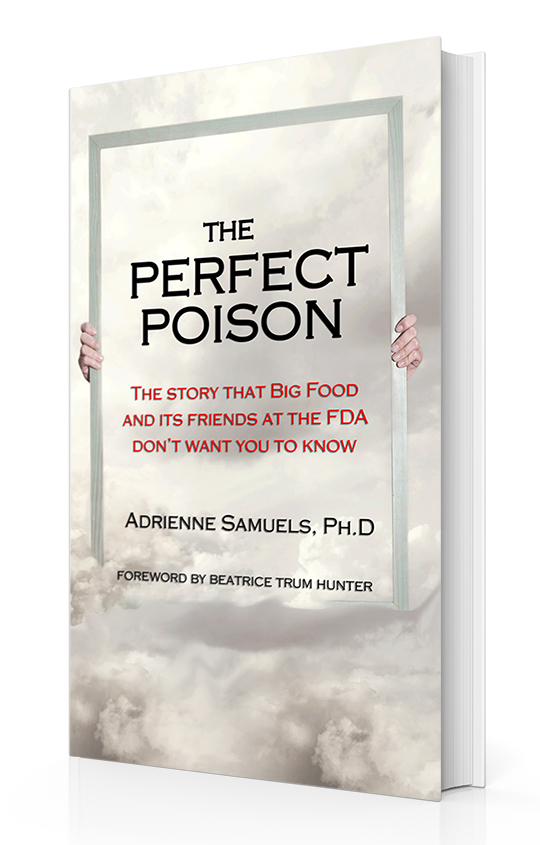
Eventually, what Adrienne had managed to piece together about the pernicious nature of various disguised additives in food, cosmetics, drugs, supplements, and infant formula was revealed in her 2022 book, The Perfect Poison: the story that Big Food and its friends at the FDA don’t want you to know.

The Truth in Labeling Campaign website, which went online in 1998, is considered one of the foremost sources for concise information on free glutamate (which is the active ingredient in MSG), where it is apt to be found, the innocuous names under which is labeled, and how best to avoid it.

Adrienne’s work on behalf of consumers over the years included sharing her findings with the FDA and various members of Congress, testifying before representatives of the U.S. Food and Drug Administration and the Federation of American Societies for Experimental Biology (FASEB) Life Sciences Research Office, and being one of the plaintiffs in a lawsuit against the FDA (Truth in Labeling Campaign et al, vs. Donna Shalala et al), which requested that free glutamate in processed food be clearly identified on product labels.

More recently, in 2020 her research article, “Dose-dependent toxicity of glutamic acid: a review,” was published in the International Journal of Food Properties, where it received many thousands of views.

In 2021 Adrienne filed three citizen petitions with the FDA asking the agency to expose the names of ingredients that contain manufactured glutamate; strip MSG and manufactured glutamate of its GRAS (generally recognized as safe) status and to replace an inaccurate webpage at the FDA – Questions and Answers on Monosodium Glutamate – with truthful information.

By 2022 she had expanded her work on MSG and manufactured free glutamate, completing a review paper titled “Glutamic acid: initiator of the obesity epidemic” that identified them as risk factors for obesity when delivered to fetuses in the womb and infants during nursing.

Thanks to Adrienne and Jack, consumers no longer need to be in the dark as to where excitotoxic glutamic acid might be lurking in processed food and other common products. Their research has also revealed the inside story of how the “Glutes” (as she referred to those working in the glutamate industry) have engineered their “research” to arrive at the predetermined conclusion that MSG is safe and how the FDA still works hand-in-hand with the influential and powerful agents of Ajinomoto, MSG’s major manufacturer, to control what you hear and read about in mainstream media.

“We learned a great deal on this journey,” Adrienne said recently, noting that she was “proud of our accomplishments” that had resulted in a growing awareness of the toxic potential of MSG.

Consumer cognizance, she added, still needs to grow more—something she hoped can still be accomplished by the campaign to which she devoted her life.