
Is It News or Is It Propaganda? Part Two

When it comes to MSG, the food-additive cabal appears to have gotten the entire mainstream-media realm under its direction.

Linda Bonvie

This past spring, I received an email from a writer by the name of Clarissa Wei.

She wrote: “I’m a freelance journalist currently working on a story about the history of MSG for National Geographic, with a focus on how public narratives have shifted over the past decade. I found your Substack piece Is it News or is it Propaganda? to be a valuable counterpoint.

“While many recent stories emphasize the science clearing MSG’s name, your piece raises important questions about how that message is packaged, funded, and disseminated. and who ultimately benefits.

“I’d love to include your voice in my piece.”

Clarissa even provided links to past articles she had done for big-name media outlets, such as The New York Times, BBC, and The New Yorker.

“I appreciate the chance to be included,” I unsuspectingly wrote back, adding, “Thanks for tracking me down.”

The ‘Big Fat Lies’

In the mid-1990s, I was introduced to Adrienne Samuels and her husband, Jack.

The ultimate accidental consumer advocates, Jack and Adrienne spent the second half of their lives informing regulators and warning the public about the dangers of free glutamic acid, which is the active ingredient in monosodium glutamate and a long list of other food additives.

I worked with Adrienne (who held a Ph.D.) until her passing at the age of 89 in 2024. And over those many years, I learned a lot from her, especially what she liked to call the “Big Fat Lies” on the subject.

But her most important lesson, something she would tell me again and again, is that no mainstream media organization would EVER include information in an article that goes against the official propaganda line bought and paid for by the glutamate industry. You’re apt to come across its misinformation/lies online, in print, or on TV, Adrienne wrote, in what appear to be “legit” articles, and in cutesy video presentations that pop up on Facebook. All that propaganda – that hype — is constructed on six falsehoods…

Based on what I learned, I even wrote extensively about the Ajinomoto/Edelman PR World Umami Forum in 2018, which, in truth, turned out to be nothing more than a boot camp for journalists and bloggers to help them effectively spread the messaging of Ajinomoto, the world’s largest producer of monosodium glutamate.

But somehow, when Clarissa contacted me, I thought perhaps times had changed. After all, National Geographic is all sciency, a supposed pillar of scholarly information since 1888. Never mind that it somehow seemed an odd venue for an article on MSG.

Clarissa sent me her questions, which I promptly answered.

Enter Edelman

The piece that caught Clarissa’s eye, titled “Is it news or is it propaganda?” appeared on my Substack almost two years ago.

It revealed a spate of CBS programming that was straight out of the Ajinomoto playbook and that of its PR agency, Edelman Public Relations. The messaging I described that appears in all MSG programming and articles, not just those from CBS, always follows the same predictable path—namely, that MSG is “making a comeback” (a term used so often that it must be a mandatory line).

Invariably included in such messaging is a letter sent over 55 years ago to the New England Journal of Medicine that started the entire “controversy.” In addition, there has since been “decades of research;” bevies of chefs making appearances to discuss what a wonderful addition MSG is to culinary creativity, and for the grand finale, the xenophobic zinger – that avoidance of MSG is somehow “anti-Asian.”

Clarissa’s article in National Geographic came out in June without including either my “voice” or that of anyone else with a “valuable counterpoint.”

In fact, the article followed the blueprint of hundreds of others that preceded it so perfectly, it even included “making a comeback” in the headline and ended by touching on “decades of racialized fear.”

The brain-cell threat that disappeared from the dialogue

The concept of MSG’s “making a comeback” after a ruinous blow from that aforementioned doctor’s 1968 letter to the New England Journal of Medicine, describing his reactions after eating in Chinese restaurants, is a rather interesting marketing device.

As it happened, a much bigger and well-publicized event occurred the very next year. Never mentioned in one of these almost certainly “placed” articles are the 1969 findings by Dr. John Olney, a top researcher at the Washington University School of Medicine in St. Louis, who had recently published data showing that when newborn mice were exposed to the additive, they suffered extensive brain damage and endocrine disorders. Olney coined the term “excitotoxin” at the time to describe those reactions caused by monosodium glutamate. Shortly afterwards, Olney found the same brain-damaging effects could be duplicated in infant rhesus monkeys.

Certainly, fessing up to “Chinese Restaurant Syndrome” is a lot more palatable to industry than debating whether or not MSG kills brain cells in baby monkeys.

And keep in mind that back then, MSG was actually being added as a flavor enhancer to baby food, making the resulting publicity and backlash immediate, and causing three major companies to remove MSG from their baby-food jars.

Over the years, the glutamate industry has worked hard to rearrange or obliterate such inconvenient facts whenever possible, using clever PR techniques and well-placed articles promoted by extensive contacts with legitimate journalists who have access to top-tier outlets, along with social media “influencers.”

Some of the most long-lived lies include the repetitive refrain that the glutamate in MSG is “identical” to what’s found in the human body*, and that the additive occurs “naturally” in food**.

The dissemination of this type of disinformation, no doubt, won’t stop anytime soon. It is, after all, extremely well-funded, and the continued, unabated use of MSG and other similar flavor-enhancing additives will go on being regarded as a necessary ingredient in cheap, ultra-processed foods.

But I’m thinking that perhaps I did have a small but significant effect on Clarissa’s story after all.

Mentioning a “corporate narrative” at the end, she also says, “When identity, science, and branding align, it can be hard to tell who’s leading the conversation.”

Considering the formidable food-industry forces she was up against, I guess that counts for something.


For more information on additives that contain free glutamate, see this page at the Truth in Labeling Campaign.

*The glutamate in the human body is L-glutamate. L-glutamate, only. The glutamate of any manufactured glutamate (found in monosodium glutamate and pea protein isolate, for example) is made up of both L-glutamate and D-glutamate, plus numerous toxic impurities created during the manufacturing process that the industry has been unable to eliminate.

**MSG is manufactured using genetically modified bacteria that excrete glutamic acid through their cell walls. In the United States, monosodium glutamate is produced in Ajinomoto’s plant in Eddyville, Iowa. Over the decades, there have been numerous patents filed for various methods of producing monosodium glutamate, which is most definitely not naturally occurring.
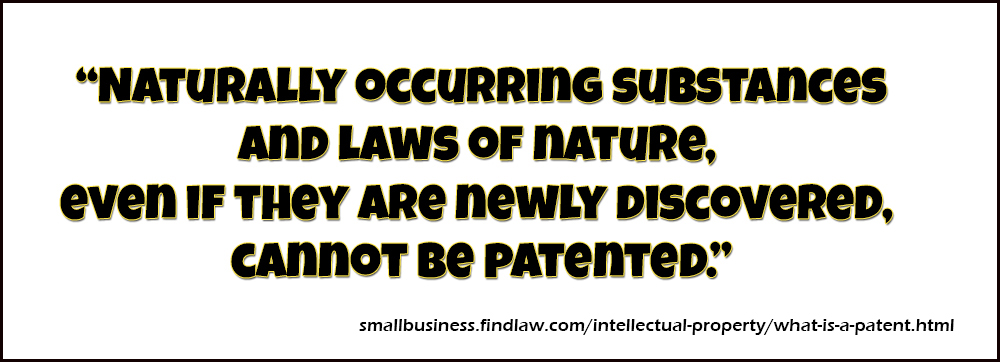
If MSG is ‘natural’ why have hundreds of patents been issued for methods of producing it?

Monosodium glutamate (MSG) found in an animal, vegetable, or mineral was manufactured and then ingested or added in some manner.

Below are just three examples of patents pertaining to the manufacture of MSG. There are literally hundreds more. MSG is man-made.

1. US3281247A – Process for producing monosodium glutamate

https://patents.google.com/patent/US3281247A/en

2. CN104211611A – New fermentation technology of sodium glutamate

https://patents.google.com/patent/CN104211611A/en

3. WO1996031459A1 – A process for the preparation of monosodium glutamate

https://patents.google.com/patent/WO1996031459A1/en

Below are general discussions pertaining to methods used in production of MSG (written by scientists, not by Ajinomoto’s hired hands).

1. Optimization of glutamic acid production by Corynebacterium glutamicum using response surface methodology

Naiyf S. Alharbia, Shine Kadaikunnana, Jamal M. Khaleda, Taghreed N. Almanaaa,Ganesh Moorthy Innasimuthub, Baskar Rajooc, Khalid F. Alanzia, Shyam Kumar Rajaram.

Journal of King Saud University – Science. Volume 32, Issue 2, March 2020, Pages 1403-1408.

https://www.sciencedirect.com/science/article/pii/S1018364719318440

2. Tasty waste: industrial fermentation and the creative destruction of MSG

Sarah E. Tracy

Food, Culture & Society (2019). 22:5, 548-65,

https://doi.org/10.1080/15528014.2019.1638117

Eating all your fruits and vegetables?

Eating all your fruits and vegetables and still not feeling as chipper as you used to?  You’ve probably checked the purity of the water you drink and determined that you don’t live over a toxic waste dump.  But have you checked for excitotoxic – brain damaging – free glutamate in the processed foods you’re eating — even ones considered “healthy”?  You’ll find the names of excitotoxic ingredients that are used in food at: https://www.truthinlabeling.org/assets/ingredient_names.pdf

Were those beautiful raspberries fertilized with MSG?

We’ve told you previously about a product called AuxiGro, a plant yield enhancer that contains MSG’s toxic component manufactured free glutamate. According to a label found online, AuxiGro WP (wettable powder) contains 29.2 percent L-glutamic acid. 

The Truth in Labeling Campaign first learned of AuxiGro in the late 1990’s and tracked its approval in the U.S. as it made formal objections to federal and state authorities, including the California Department of Pesticide Regulations.

Emerald BioAgriculture, which manufactured AuxiGro for the U.S. market, told us this past summer that they “exited the AuxiGro business” starting in 2005, with final sales of the product in 2007. “It is no longer available,” they said.

Or is it?

We recently came across this video (posted up top) from 2014, a testimonial for using AuxiGro on raspberries from Mexico. You don’t need to speak Spanish to get the drift of it – big, beautiful berries, all due to AuxiGro.

While it’s hard enough to determine what pesticides and fertilizers have been used on U.S. grown produce, it’s practically impossible to uncover what has been applied to imports. We have noticed, however, that the imported berries in the supermarket are exceptionally large this year. Is that due to AuxiGro? We’ll probably never know, but where fruits and vegetables are concerned, bigger isn’t always better.

Birth of excitotoxicity

Monosodium glutamate, the food additive, was invented in 1908 at which time the glutamate component was produced by extracting glutamate from protein — a slow and costly method.

It was reinvented in 1957 using genetically modified bacteria to produce glutamate. Following reinvention, virtually unlimited amounts of free glutamate became available, and great quantities of free glutamate, often in the ingredient called monosodium glutamate, were poured into processed foods. For the first time in history, there existed the excessive amounts of free glutamate needed to produce excitotoxicity.

Meet the people who manufacture and market toxic chemicals disguised as food

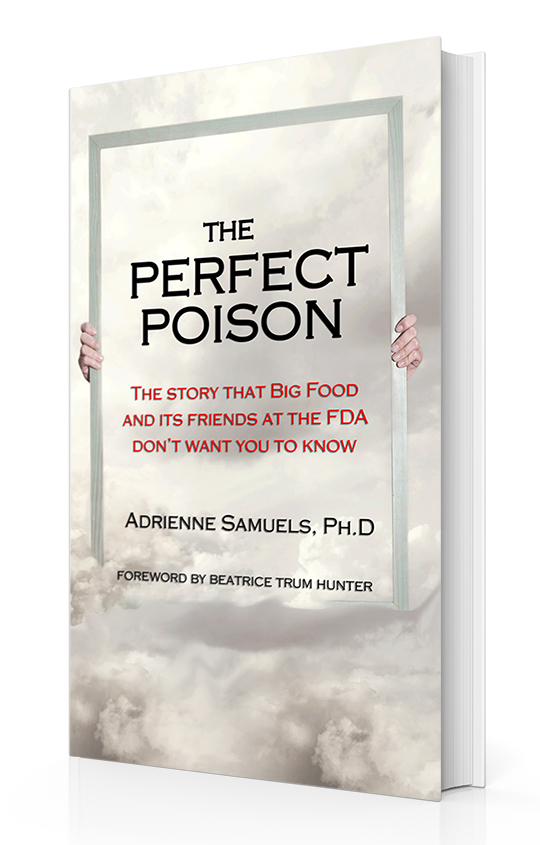
The book that will introduce you to the men and women who manufacture and market toxic chemicals dressed up as food, the people they hire to execute carefully rigged research guaranteed to conclude that excitotoxic — brain damaging — free glutamic acid is safe for human consumption, and the ways in which the U.S. government has, from the beginning done their bidding. Get your copy here.

MSG and the Media. Who signed the gag-order?

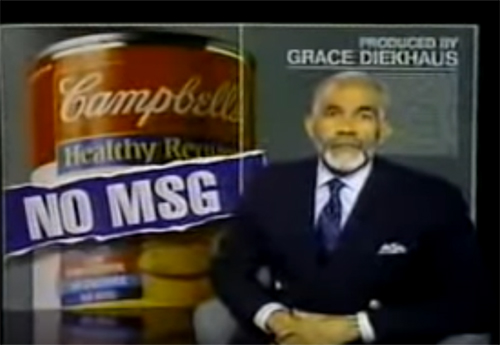
If it seems like you never hear mention of the toxic nature of MSG on any nationally-aired show – cable or network – it’s true! It’s almost as if a gag-order had been issued. In fact, any talk about MSG in the media has been virtually nonexistent since the 1991 CBS 60 Minutes broadcast (right below) about the dangers of the flavor enhancer.

Sometime after the 60 Minutes program aired, Nancy Millman, writing for the Chicago Tribune, did an article focusing on the activities of Jack Samuels (co-founder of the Truth in Labeling Campaign) and his fight to have MSG labeled. According to Millman, prior to beginning her work, she had cleared the story with her editor, but the article was never published.

Similarly, the Baltimore Sun accepted and then refused to print an article on MSG by journalist Linda Bonvie, and an editor at the New York Times told Bonvie that she wouldn’t take a story that even mentioned MSG. According to Bonvie, the editor had said she was unwilling to face the pressure and intimidation that would result if she did. And in 1991, Don Hewett of 60 Minutes said, on air, that he had never had so much pressure applied to him by industry as he had prior to the airing of the MSG segment. Although rated by TV guide as one of the two most watched programs of the 1991 year, 60 Minutes has refused to run the piece again. Prior to the 60 Minutes show airing, Ajinomoto pulled out all the stops to kill it. In early 1990, we had become aware that the show was in the works, and over the course of its development had provided information to producers Grace Dickhaus and Roz Karson. In March of 1991, a producer for the CBS show called Ajinomoto with the announcement that they were thinking of doing a segment on their product.

According to the Wall Street Journal a group of trade associations launched one of the largest pre-emptive campaigns in public relations history. The WSJ said that “A crisis-management team specializing in 60 Minutes damage control has been hired to help the industry execute an elaborate game plan to forestall a repeat of the 1989 Alar-on-apples scare.”

We had received a copy of the “International Food Information Council MSG Committee/MSG Coalition COMMUNICATIONS PLAN” from an anonymous source, which detailed IFIC’s plans for scuttling the 60 Minutes segment on MSG, or, failing that, to provide for crisis management. We forwarded IFIC’s plan to the WSJ.

The IFIC, which represents itself as an “independent” organization, sends attractive brochures to dietitians, nutritionists, hospitals, schools, the media, and politicians, proclaiming the safety of monosodium glutamate. IFIC’s paid relationship to the glutamate industry is documented in the 31st edition of the Encyclopedia of Associations.

Umami: the PR campaign continues

Like a creeping fungus the PR firm Edelman Communications is covering the media landscape with as much propaganda as inhumanly possible related to all things MSG.

This gigantic public relations agency, with offices all over the globe, has several missions where its prize client Ajinomoto (one of the world’s largest producers of MSG) is concerned.

Its bedrock campaign, however, is over the term “umami.”

Once again, umami has popped up as a “food trend,” for 2022, something Edelman has been peddling for years now.

A Japanese word loosely translated to mean a “pleasant” taste, Edelman’s efforts to rebrand MSG as umami has been gaining momentum for some time. But don’t just take our word about it. Ajinomoto, at its global website says in the first line of copy on its umami “fact” page: “Umami, which is also known as monosodium glutamate…”

The “facts” go on to say that “umami spreads across the tongue,” and “provides a mouthwatering sensation.” It also hypes the concept of the newly discovered “fifth taste,” which in case you didn’t guess is, of course, umami.

There are some basic flaws to those claims, clearly explained by Truth in Labeling co-founder Adrienne Samuels in a blog last year titled: “Umami: The con of the decade?”

She wrote:

“It’s common knowledge that there are glutamate receptors in the mouth and on the tongue. Could researchers be hired to produce studies demonstrating that glutamate containing food can stimulate those glutamate receptors, and then declare to the world that a fifth taste has been discovered — calling it umami? I wondered.

Never mind that for years monosodium glutamate was described as a tasteless white crystalline powder. Never mind that Julia Child, who in her later years was recruited to praise the use of monosodium glutamate, never once mentioned the additive in her cookbooks. Never mind that if there was taste associated with monosodium glutamate, people who are sensitive to MSG would be highly motivated to identify that taste and thereby avoid ingesting MSG – which they claim they cannot do.”

 As Adrienne said: “I don’t know whose brainchild it was, but it certainly was a brilliant move on the road to marketing monosodium glutamate – a move precipitated by a growing public recognition that monosodium glutamate causes serious adverse reactions. And even one step farther up the brilliance chart, this monosodium-glutamate-taste-of-its-own was given a name. Naming things makes them easy to talk about and gives them respectability.”

And that’s spot on.

Industry’s FDA

It’s no secret that the FDA represents the interests of Big Food and Big Pharma – not consumers. Here is a small example of its allegiance to large corporations that we hadn’t noticed before. Unfortunately, many people still believe that if the FDA says something it must be true.

The following comes from the FDA page called “Questions and Answers on Monosodium glutamate (MSG)” found here: https://www.fda.gov/food/food-additives-petitions/questions-and-answers-monosodium-glutamate-msg accessed on 7/22/2020.

What is MSG?

The FDA says that monosodium glutamate (MSG) is the sodium salt of the common amino acid glutamic acid. Glutamic acid is naturally present in our bodies, and in many foods and food additives.

How is it made?

The FDA says that MSG occurs naturally in many foods, such as tomatoes and cheese. People around the world have eaten glutamate-rich foods throughout history. For example, a historical dish in the Asian community is a glutamate-rich seaweed broth. In 1908, a Japanese professor named Kikunae Ikeda was able to extract glutamate from this broth and determined that glutamate provided the savory taste to the soup. Professor Ikeda then filed a patent to produce MSG and commercial production started the following year.

What is MSG?

Mono (single) sodium glutamate in science-speak is glutamate tied to a sodium ion, just as monopotassium glutamate would be glutamate tied to a potassium ion. That’s the makeup of the mono sodium glutamate occurring naturally in our bodies. (Glutamate is rarely found “free,” but is ordinarily tied to an ion such as sodium or potassium.)

The monosodium glutamate that Ajinomoto is selling is made up of manufactured glutamate, the impurities that invariable accompany manufactured glutamate, and sodium.

How is it made?

MSG doesn’t occur naturally anywhere — it’s made – manufactured! The monosodium glutamate that Ajinomoto is selling is a product made in Ajinomoto’s plant in Eddyville Iowa where glutamate is produced by genetically modified bacteria that secrete glutamate through their cell walls, which is then mixed with sodium. (The process for manufacturing MSG has been patented, and as the process is improved over time new patents are awarded.)

Want to learn more about how the FDA cooperates with industry? You’ll find it in our just-out book, The Perfect Poison (available here), on the webpages of the Truth in Labeling Campaign, on Pinterest, in The toxicity/safety of processed free glutamic acid (MSG): A study in suppression of information, and in countless books such as White Wash by Carey Gillam, and Eating May Be Hazardous To Your Health – The Case Against Food Additives by J. Verrett and J. Carper.

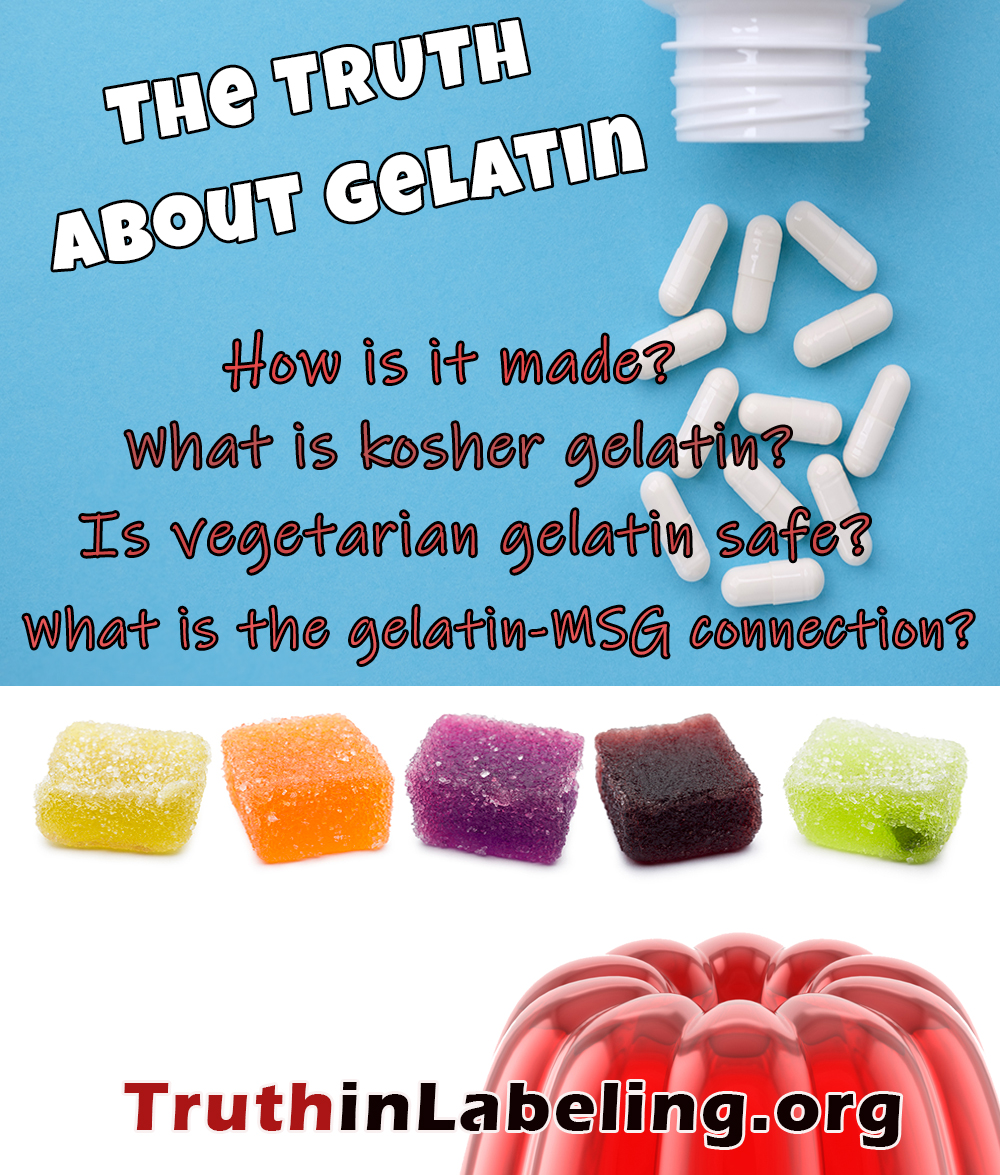
The Truth about Gelatin

The Truth about Gelatin originally appeared in Earth Clinic a top-rated alternative health website that features in-depth information and videos about holistic treatments (for both people and pets), home remedies and effective health-boosting uses for numerous everyday products ranging from coconut oil to hydrogen peroxide.

By Adrienne Samuels

You’re likely to run into gelatin in some surprising places. While it’s commonly found in foods such as gelatin desserts (think Jell-O), aspic, marshmallows, gummy candies, vitamins, and other supplements (including pill capsules), it can also turn up used as a binder in yogurt, ice cream, cream cheese and anywhere a food manufacturer wants to create a good “mouthfeel” for their product.

But like sausages, nobody wants to see how gelatin is made.

Most of the gelatin found in food and supplements comes from heat-degraded collagen derived from pigs and cows. It’s an ugly process that completes the cruel loop of factory farming by taking bone, stripped skin, and connective tissue from slaughterhouses and processing them (through acid, heat, and grinding) into an innocuous-looking, tasteless powder.

There’s nothing in that bouncy gelatin dessert or a smiling gummy bear that will give a hint of the cruelty involved in its creation. But ethical concerns aside, there’s much more not to like about gelatin.

The Gelatin – MSG Connection

Although it might seem that a marshmallow Peep has nothing in common with a shaker of the MSG flavor-enhancer Accent, they are actually related as both contain manufactured free glutamate.

Just as drugs have side effects, manufactured free glutamate has side effects such as irritable bowel, headache, heart irregularities, and skin rash. In addition, manufactured free glutamate is an excitotoxin: a neurologically active compound that in high concentrations has detrimental excitatory effects on the central nervous system and may cause injury to nerve cells.

Manufactured free glutamate is created in food ingredients when protein is broken down into its constituent amino acids. One of those amino acids will always be free glutamate. It is also mass-produced using genetically modified bacteria that excrete glutamate through their cell walls.

In the case of gelatin, the Encyclopedia of Food Science and Technology states that glutamic acid (a.k.a. glutamate) which makes up around 10 percent of gelatin, isn’t the only neurotoxic component released during the manufacturing process. Aspartic acid, another brain-damaging amino acid is also present at a level of around 6 percent. Both sources will cause the same adverse reactions in people, and according to experts like Dr. John Olney, both glutamic and aspartic acid will combine to produce a toxic double-whammy.

Might you have a noticeable reaction to a gelatin product? That would depend on your individual sensitivity as well as the amount of manufactured free glutamate you consume in foods along with the gelatin. And your sensitivity is something that can change with age, illness, if you suffer a head injury, or consume a large amount of manufactured free glutamate.

Don’t Ask, Don’t Tell

Look at any gelatin-containing product in the store and you won’t see any mention whatsoever of glutamic acid, aspartic acid (or pigskin and tendons being bathed in acid for that matter). But beyond packaging, which fails to disclose important information about the possible toxic effects of gelatin, are the lies circulated by Big Food to convince you to buy their products.

You’ll hear that manufactured free glutamate is “naturally occurring,” has been extensively studied and found to be “safe,” and the biggest whopper of all — that the glutamate in the human body is exactly the same as what you’ll find in foods such as gelatin. The real story is that all manufactured free glutamate contains impurities that are unavoidable by-products of the manufacturing process.

But what about “kosher” or even “vegetarian” gelatin, are those better choices?

A Fishy Proposition

Kosher gelatin can be derived from either fish or cows certified as kosher and killed in a specific manner. Since kosher rules prohibit the combining of meat and dairy, if you notice kosher gelatin in a dairy product, it’s probably fish-derived.

Fish byproducts such as skin, scales and bones contain high amounts of collagen, and the processing will release neurotoxic free glutamate just as with gelatin from cows or pigs. Published research out of Indonesia has found free glutamic acid amounts in fishbone gelatin ranging from a low of over seven percent to a high of over 10 percent, with aspartic acid going from a low of close to five percent to a high of 6.5 percent, depending on the type of fish.

Vegetable Gelatin

As far as veggie gelatin goes, it too has issues.

Produced from processed algae and seaweed (a marine algae), vegetarian gelatins are derived from rich sources of certain amino acids that will also contain significant amounts of free glutamate and aspartic acid after processing.

If gelatin is something you’ve decided to avoid, it pays to read the ingredient labels of all processed foods and supplements thoroughly, as well as pharmaceuticals (including OTC drugs). And while you won’t be able to determine if the gelatin came from pigs, cows, or fish, the name gelatin is required to be listed on the packaging.

Resources:

The Free Dictionary: https://medical-dictionary.thefreedictionary.com/excitotoxin (accessed 5/4/21)

Amino acid and proximate composition of fish bone gelatin from different warm-water species: A comparative study.
https://iopscience.iop.org/article/10.1088/1755-1315/58/1/012008 (accessed 5/4/21)